
Vanderburgh County Current Owner Record
On the XSoft detail page, the present ownership block is labeled `CURRENT OWNER`. The inspected parcel shows `MELTON, SAMANTHA & JACK JR T/E`. Keep that spelling intact. The deed, not a guess at the abbreviation, explains how title is vested.
| Owner of Record | MELTON, SAMANTHA & JACK JR T/E |
|---|---|
| Mailing Address | 619 SOUTH RUNNYMEADE AVE, EVANSVILLE IN 47714 |
| Situs Address | 619 RUNNYMEADE AVE, EVANSVILLE, IN 47714 |
| Parcel | 82-06-28-015-006.009-027 |
| Legal Description | REALTY PLACE L 10 |
| Latest Transfer Row | Melton, April 9, 2024 |
The mailing address and the situs address read differently on the parcel detail. Neither one proves who lives there. The mailing address routes tax correspondence, while the situs address fixes the parcel's location on the ground.
See Vanderburgh County's Owner Field
The public Vanderburgh XSoft portal takes a search by owner, address, or property number. Open the parcel detail and note the displayed date together with the owner label and parcel identity.
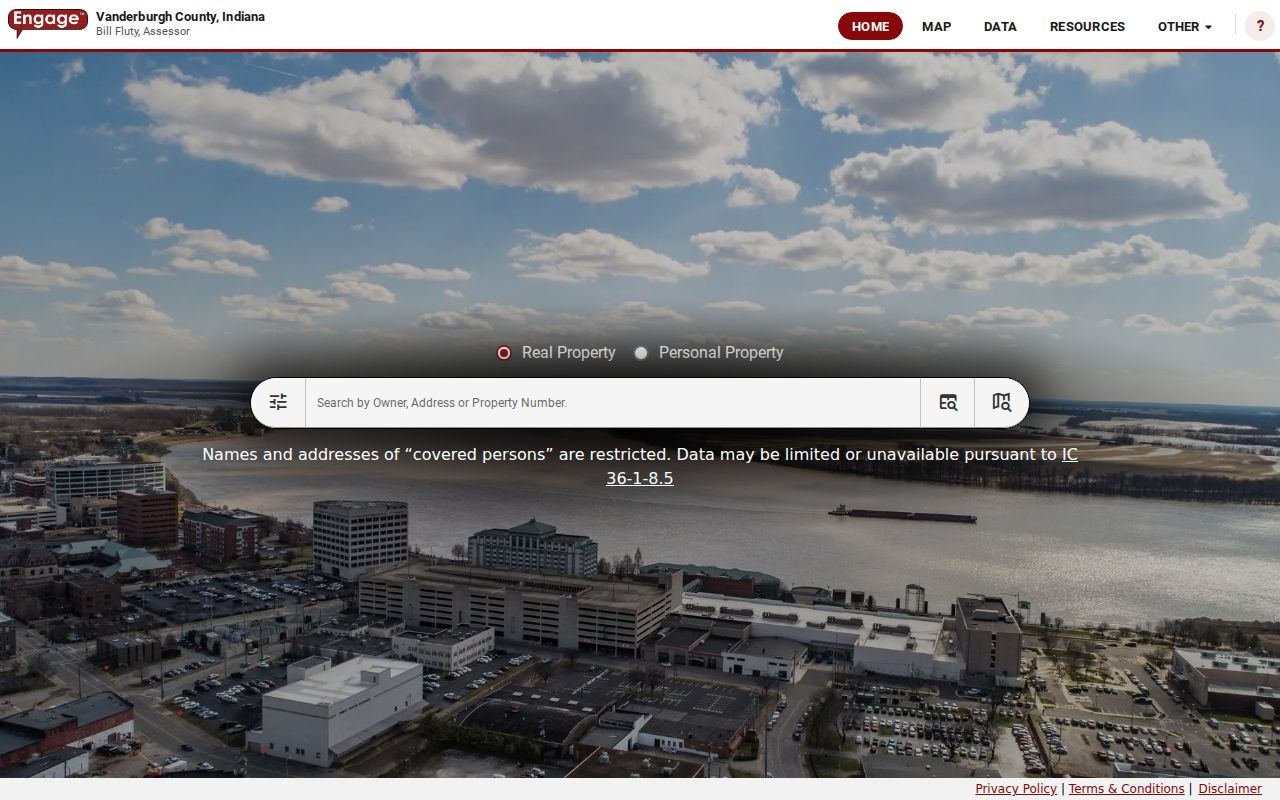
The search page opens onto separate owner, transfer, sale, and value areas. One field should never stand in for another, since each answers its own ownership question.
Vanderburgh County Owner Update Timing
XSoft refreshes its data daily. The annual Property Record Card PDFs follow the assessor's calendar instead. Even so, a daily refresh does not promise that Recorder intake and assessment processing land on the same day.
Date the result. Write “XSoft displayed this owner on” and add the query date.
After a recent closing, inspect the newest recorded deed before treating the roll as final.
Vanderburgh County LLC and Trust Owners
An LLC or trust name may be the whole public answer, and that is fine. For an Indiana entity, search the Indiana Secretary of State Business Search. Use it to check the entity's status. Never swap a registered agent's name for the property owner, though. For a trust or estate, read the deed and any relevant probate order. The public roll may compress a relationship. Only the instrument itself explains it.
When Vanderburgh County Records Conflict
Compare dates first. Then verify the parcel number, legal description, grantee, instrument date, and recording date. A sale row, a transfer row, and a deed can describe connected but distinct events. Treat them as separate facts until they line up. The county's 2026 Fidlar contract record extends land-record systems through 2031. The Recorder publishes no confirmed public search URL or online start year for that system. Call the Recorder at 812-435-5215 when the public route is unclear.
Read Vanderburgh County Transfer Dates
The sample parcel shows a sale dated April 4, 2024 and Melton and May transfer rows dated April 9, 2024. Those dates sit close together. They are not interchangeable. A sale date, a deed execution date, a recording date, a sales-disclosure date, and assessor processing each answer a different question about the same conveyance. Copy the portal spelling rather than tidying it. Older transfer entries include Murphy, Majic LLC, Epps, Martyn, Clark, and Noble, plus an affidavit-type row. Treat those rows as navigation leads. They are not a certified chain of title. Stay focused on the newest matched instrument for the present-owner question.
Control the Vanderburgh County Match
A common owner name or a tiny address variation can pull up the wrong parcel. Guard against it. Retain the full parcel number, `82-06-28-015-006.009-027`. Pair it with the legal description, Realty Place Lot 10, Knight Township, and the Evansville City-Knight taxing district. Those fields make the match reproducible by anyone. Systems render parcel strings in different conventions. Two formats are not equivalent until the situs, legal description, and district all agree. A GIS map can confirm the geography. But its address is only a locator, not proof of ownership or of the owner's mailing address.
Documents Behind the Current Owner
The assessor detail links or describes a property record card, Form 11, sketch, photo, and sales disclosure. None of those replaces the deed. The annual property card also follows its own calendar and may lag the live portal. When current ownership carries legal weight, request the deed image or a certified copy from the Vanderburgh County Recorder in Room 231 of the Civic Center Complex. Statewide guidance treats ordinary copies and certification as paid services. Confirm current local pricing before ordering.
Use Vanderburgh County Owner Data Carefully
Property records support buying and selling diligence. They also help with estate work, assessment review, boundary questions, and civic transparency. They do not expose every personal fact. Courts can seal material, and Indiana programs shield some addresses for qualifying people. If a portal suppresses an address, do not work around the restriction through unrelated databases. Ask the custodian what record can lawfully be released. Also ask what proof of direct interest is required. Public availability is a floor for responsible use. It is not a license to pressure or track anyone.
Keep Current and Former Owners Separate
The parcel detail carries owner history and transfer rows. But the current-owner question ends at the present owner field and the latest matched deed. A name from 2013, 2009, or 2004 may explain the chain. Blend it into the current answer, though, and the record is wrong. Use the transfer table to locate documents, not to declare legal title. Some rows reflect affidavits, corrections, estate events, or non-market conveyances. If prior ownership is the real question, walk backward through the deeds one instrument at a time. Keep every book, page, instrument, and legal-description control along the way.
Current Owner Versus Last Buyer
A last sale row does not settle the ownership question. The transfer may still be working through processing. It may cover several parcels. It may also fall into an exempt or related-party category, which distorts any price you infer from it. Some deeds transfer title with no market price at all. For the tax roll's current answer, read the owner field. For the grantee language that actually passed title, read the recorded deed itself.
On the sample record, the April 2024 sale and transfer entries sit close together in date. Treat them as cross-checks for each other. They are not interchangeable facts. Cite each table by its own field label and date.
Ask Vanderburgh County's Record Custodians
Wrong owner name, mailing address, parcel detail, or assessment figure in XSoft belongs to the Assessor's desk. A deed image or an instrument question belongs elsewhere. So does a certified land record. Those items belong to the Recorder in Civic Center Room 231. Contact either office with the parcel number and document reference. Name the exact field in conflict when you write.
A business owner raises a second trail. The Secretary of State record confirms organization status and lists the registered agent. An estate transfer may add probate context through MyCase and the Clerk's public case records. Neither source substitutes for the deed that conveys the real-property interest.
Cite a Vanderburgh Current Owner
A strong source note lists the portal name, the query date, the parcel number, the exact owner value, situs, mailing address, legal description, and the latest deed or transfer reference. Each element pins down what the reader actually consulted.
Skip the bare sentence "X owns the house." Write instead: "Vanderburgh XSoft displayed X as CURRENT OWNER on the stated date; the latest matching Recorder instrument was also cited." That wording keeps a public roll distinct from a title opinion. Keep a copy of the result, or at least note the displayed date. The live roll changes after new transfers, corrections, and annual updates. A small source note lets any reader repeat the lookup.
Confirm Vanderburgh County's Current Owner
Start with the tax roll card, then confirm against the newest recorded deed for instrument-level evidence. Match the two sources by parcel number and legal description, never by surname alone.
- Copy `CURRENT OWNER` and the parcel identity from XSoft.
- Find the latest Recorder instrument for the same legal description.
- Read the grantee and vesting text without expanding abbreviations.
- Date both sources and investigate any conflict.
- Owner of record
- The party currently named on the assessor roll.
- Vesting
- The deed language stating how title is held.
- Registered agent
- An entity's official contact, not necessarily its parcel owner or occupant.
Read Vanderburgh County Mailing Details
An owner's mailing address often differs from the property address for ordinary reasons. Send lawful property correspondence to the roll address, but do not assume the owner lives at the situs. Indiana's Address Confidentiality Program and source-specific rules can limit disclosure of some personal addresses.
Lawful use. Public owner information may support a legitimate property inquiry. Never use it to stalk, harass, threaten, or infer who occupies a home.